
How Personalized Music Can Support a Loved One With Dementia
October 17, 2026
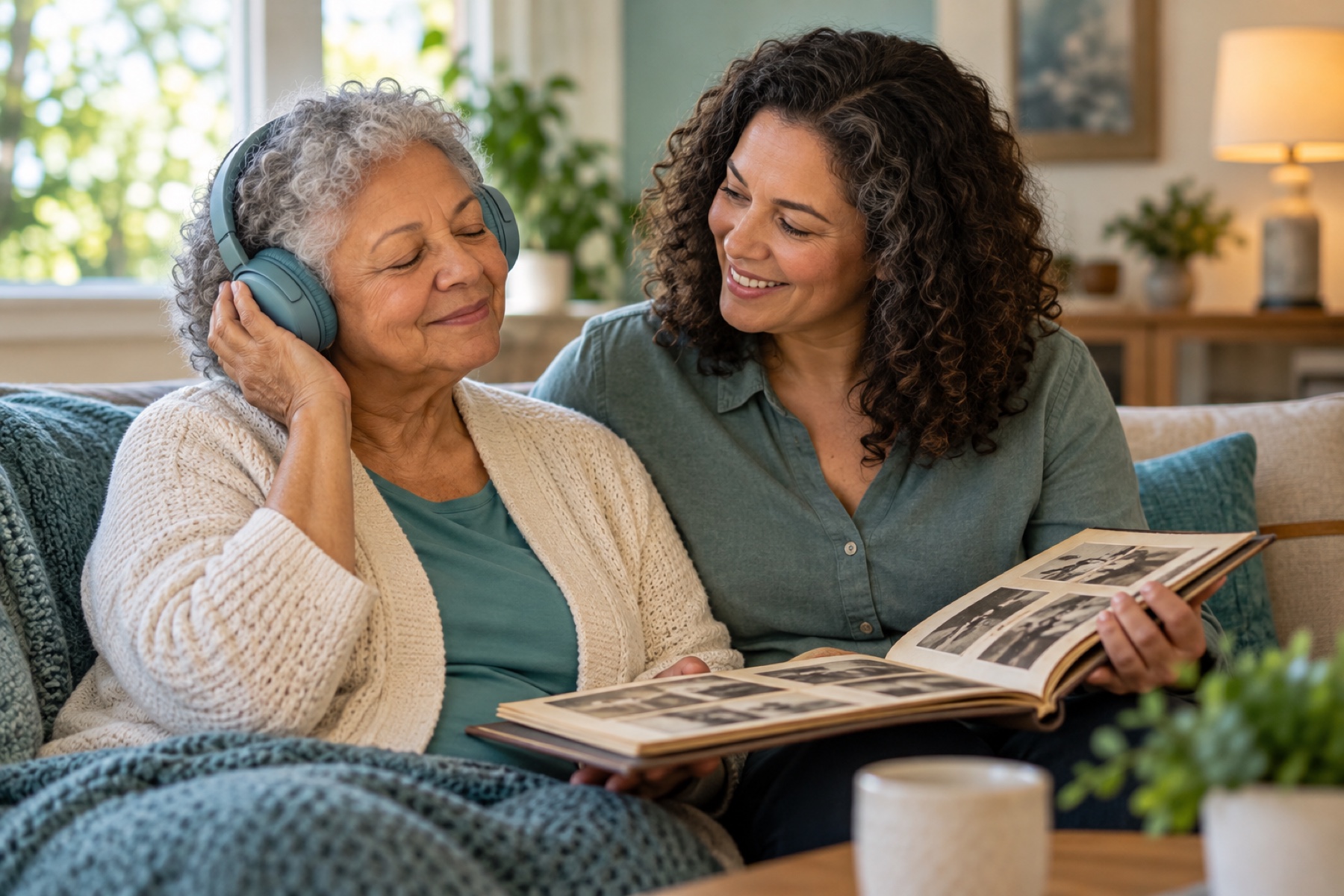
Music can reach parts of a person’s story that ordinary conversation cannot always access. A familiar song may invite movement, recognition, calm, or connection for someone living with Alzheimer’s disease or another dementia.
Personalized music is not a cure and does not work the same way for everyone. Used thoughtfully, it can become one more supportive tool in a larger dementia care plan.
Why personalized music matters
A generic playlist of “old songs” is not truly personalized. Meaning comes from the individual’s history: songs connected to adolescence, courtship, faith, military service, cultural traditions, family celebrations, work, or quiet routines.The National Institute on Aging has described research into tailored music for sleep and behavior in people living with dementia. Findings are still developing, and responses vary, but preferred music may support moments of pleasure, engagement, or calm.
The goal is not to test memory. It is to create a supportive experience.
Build a life-story playlist
Start with conversation when possible. Ask:- What music did you listen to as a teenager?
- Which songs were played at family celebrations?
- Did you sing in a choir or play an instrument?
- Which artists did you see in concert?
- What music was important in your faith or culture?
- Which songs did you dance to?
- Are there songs you dislike or prefer not to hear?
Observe the response instead of forcing participation
Play one song at a comfortable volume and watch body language. A positive response may include relaxed posture, eye contact, singing, tapping, smiling, or talking. A negative response may include tension, grimacing, agitation, crying, covering the ears, or trying to leave.Stop or change the music when distress appears. Even a beloved song may be connected to grief or an upsetting memory. Preferences can also change with fatigue, illness, hearing changes, or disease progression.
Do not quiz the person with “Do you remember this?” Try “This song makes me think of summer” or simply sit together and listen.
Match music to the moment
Different music may support different routines. Upbeat familiar songs might encourage movement during dressing or a walk. Gentle instrumental music may help create a quieter transition before sleep. Spiritual music may support worship or comfort.Avoid adding stimulation when the environment is already noisy or the person is overwhelmed. Music should not be used to silence pain, hunger, fear, infection, medication effects, or another unmet need.
If agitation begins suddenly or is unusual, consider medical causes and contact a health professional as appropriate.
Make listening safe and comfortable
Hearing can change with age and dementia. Keep the volume moderate and ask an audiologist or clinician about hearing concerns. Speakers may be more comfortable than headphones for someone who cannot explain discomfort or safely remove them.If headphones are used, supervise at first, check the fit and volume, and clean shared equipment. Keep cords and devices from creating fall hazards.
Choose an ad-free or carefully controlled setup if sudden advertisements, alerts, or unfamiliar songs could be confusing.
Turn music into connection
Music can give caregivers and loved ones something to share that is not a task. Sing together, sway, clap, look through photographs, or invite a grandchild to join. Follow the person’s lead.The moment does not have to produce a clear memory to be valuable. Enjoyment, comfort, and connection in the present are worthwhile outcomes.
Record which songs work well, when they were used, and what you observed. Share the list with other caregivers so the experience remains consistent.
Avoid overpromising the benefits
Research on music and dementia is promising in some areas and mixed in others. The NIA has reported that a large nursing-home trial did not find personalized music significantly reduced all measured agitation or medication use, even though researchers gained useful insight and other studies have observed potential benefits.Treat music as supportive care, not a replacement for medical evaluation, prescribed treatment, meaningful activity, sleep, or human interaction.
Tum Coeur’s conversation about personalized music explores why individual preference and personal history are central to this approach.
Create a simple music care plan
Write down:- Five to ten preferred songs or artists
- Songs or sounds to avoid
- Best times for listening
- Comfortable volume and equipment
- Signs of enjoyment or distress
- Who maintains the playlist
Invite family members to contribute
Ask siblings, cousins, longtime friends, or members of a faith community which songs they remember sharing with your loved one. Their suggestions can fill gaps and create opportunities for storytelling.Keep the person’s preference at the center. A song that is meaningful to one relative may not be meaningful to the listener. Test additions one at a time and document the response. If family members record a greeting or song, play it first in a calm setting so you can see whether it is comforting.
Begin with one meaningful song
You do not need a sophisticated program. Choose one song tied to a positive part of your loved one’s life, play it in a calm setting, and observe without expectation.Personalized music works best when it honors the person, not merely the diagnosis. A familiar melody may not restore what dementia has changed, but it can create a moment of comfort, recognition, movement, or shared joy. Sometimes one genuine moment is enough.
WordPress tags: Music and Dementia, Dementia Care, Alzheimer’s Caregiving, Personalized Music, Family Caregiving, Caregiver Activities
Editorial note: This article provides general educational information and does not replace medical, legal, financial, or mental health advice. Please consult a qualified professional regarding your individual circumstances.